
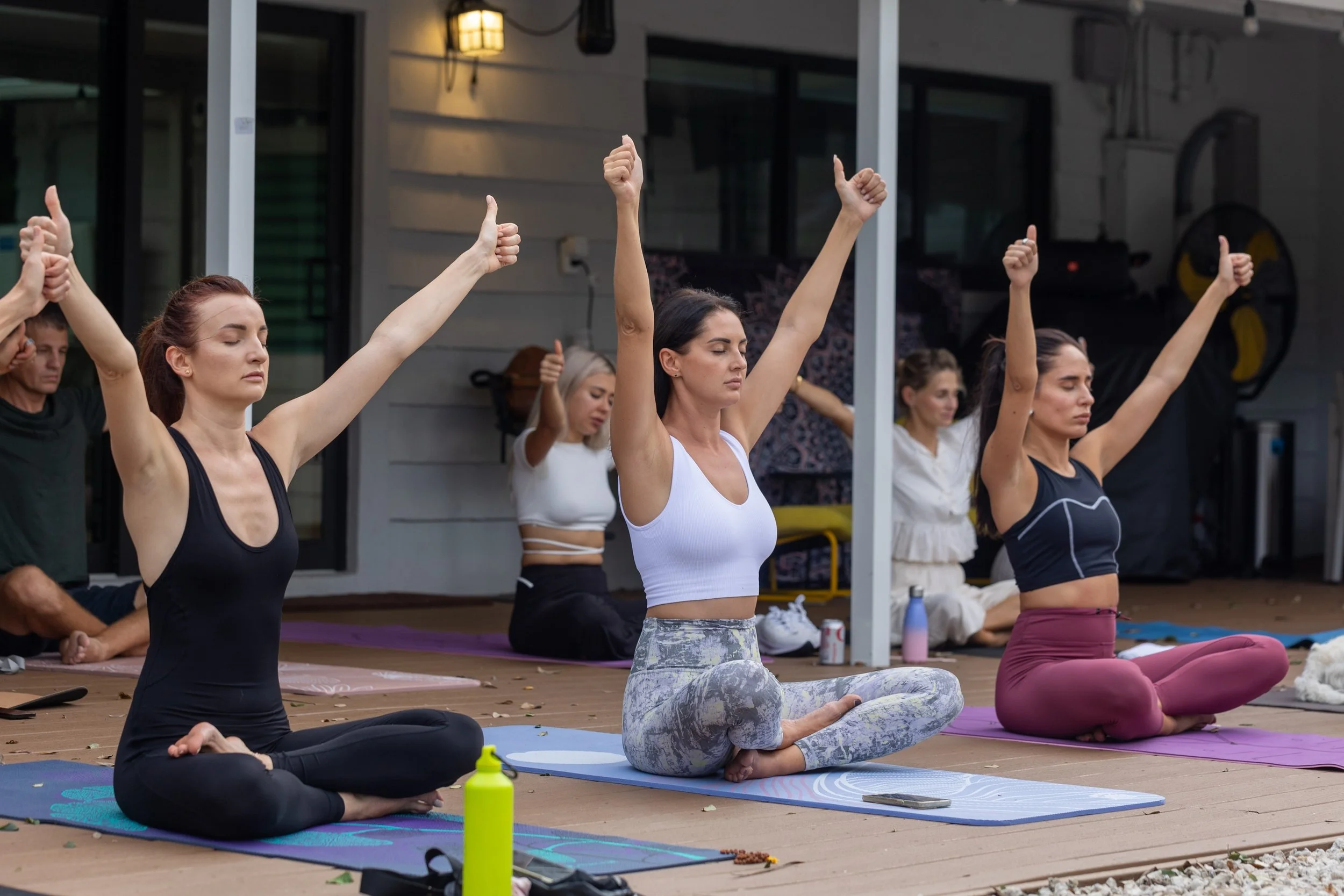
Three simple tools to settle the body and quiet the mind
Calm you can create yourself — anywhere, anytime.
The skills to steady yourself, long after you've gone home.
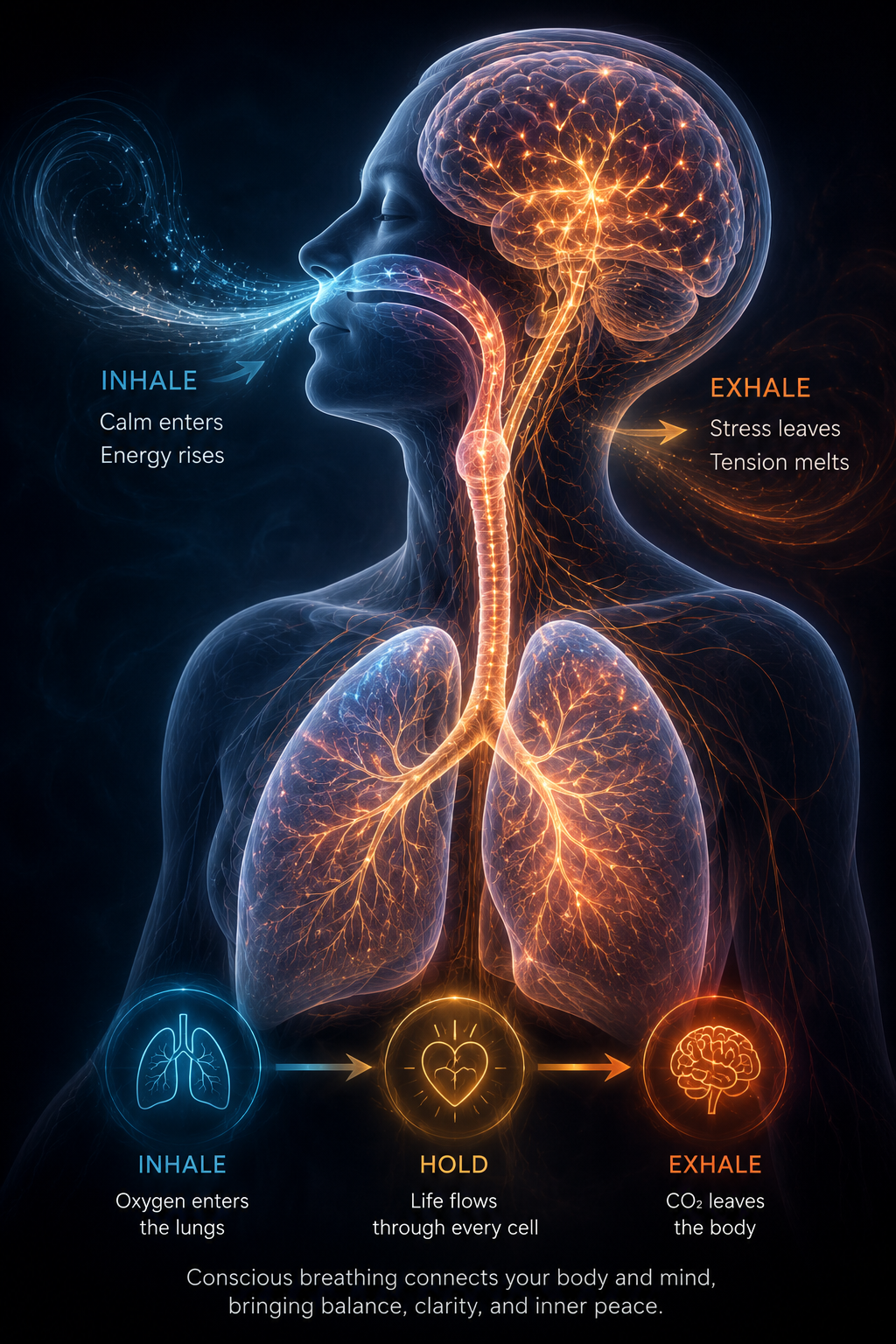
BREATHWORK- Also known as Pranayama
We teach it as a tool, not a performance, how it works, and how to do it yourself. Not only in a class room, but at your desk before a hard conversation, or at midnight when sleep won't come. You leave able to reach your own calm in five minutes, wherever you are. The fastest way back to calm is already inside you
What exactly happens when you begin with Breathwork?
You breathe about twenty thousand times a day without thinking about it. But breath is the one part of your body that runs on its own and still lets you take the wheel — which makes it the most direct line you have to your own nervous system.
Here's why it works. Your nervous system has two settings: the sympathetic — fight or flight, the accelerator — and the parasympathetic — rest and recover, the brake. Stress and burnout leave you stuck on the accelerator, running hot long after the moment has passed. You can't argue your way out of it; the body isn't listening to reason. But it is listening to your breath. A slow, unhurried exhale signals the parasympathetic system through the vagus nerve: you're safe, stand down. Heart rate settles, shoulders drop, and a body braced for hours begins to let go. Nothing mystical — just physiology you can operate on purpose.
And what settles the body settles the mind. A racing chest and racing thoughts are the same alarm in different clothes. You can't think your way calm, but steady the breath and the mind follows — the overthinking loosens, the 2am loops slow. In that space you regain what stress steals: a half-second between what happens and how you respond. Practiced over time, it lowers the volume you live at, so you're harder to rattle in the first place.
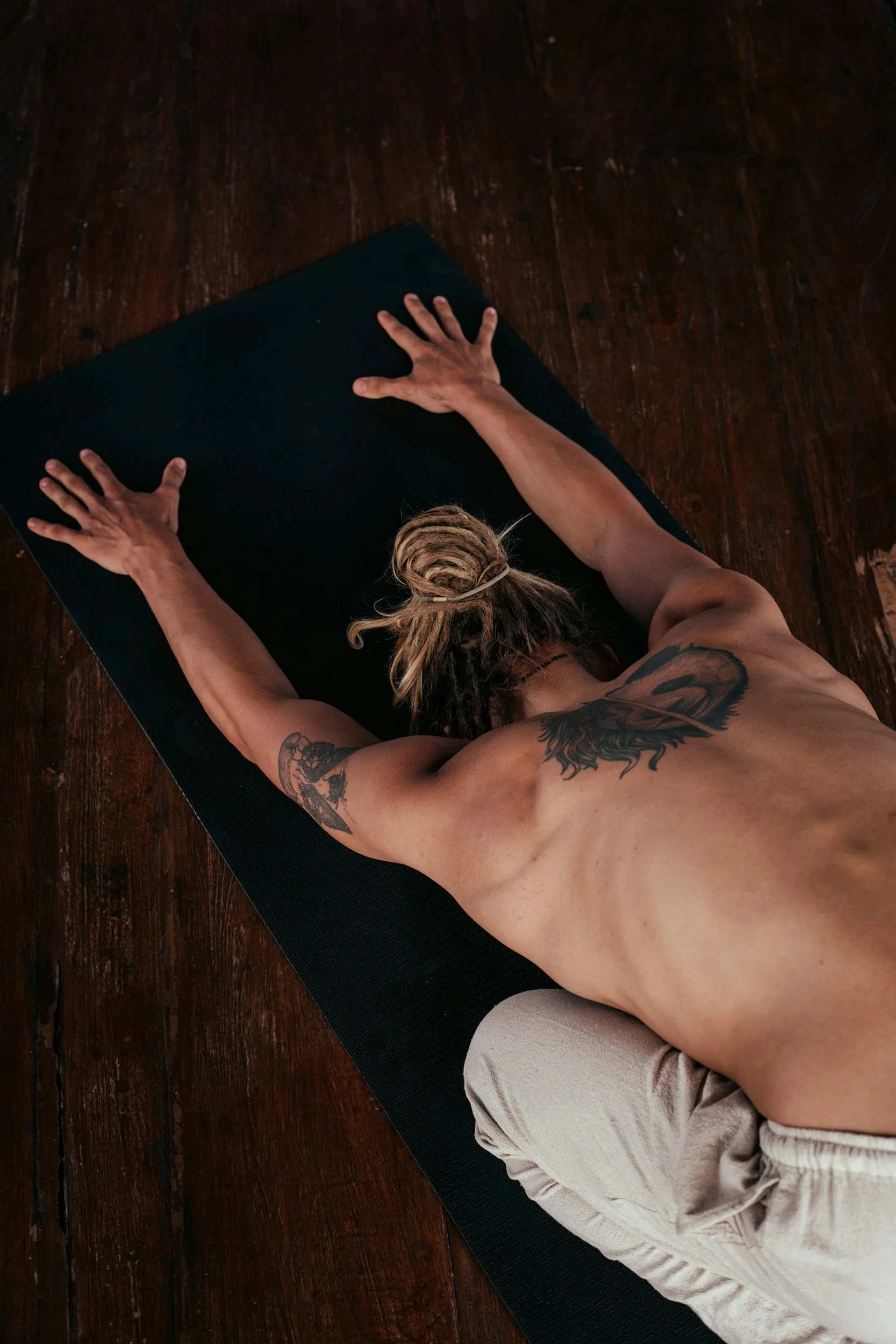
DYNAMIC MOVEMENT
Stress doesn't just live in your head. It lives in your body.
Think of the last time you were under pressure — the clenched jaw, the tight shoulders, the shallow breath. That's stress taking up residence in the body, and for most people it never fully moves out. It just accumulates, layer on layer, until tension becomes the way you always feel and you forget there was ever another setting.
Movement is how you let it out. When you're stressed, your body floods with energy meant for action — to run, to fight, to do something — but you're usually sitting still at a desk, so it has nowhere to go. It stays stuck, and stuck energy becomes tension, restlessness, and that wired feeling that won't switch off. Moving — through gentle, deliberate practice, including a modern, unforced approach to Kundalini yoga — gives that energy an exit. It discharges what stress puts in, and signals to your nervous system that the threat has passed and it's safe to come down.
And moving the body moves the mind with it. It's hard to overthink when you're fully in your body — attention drops out of the anxious loops in your head and into your hands, your breath, your feet on the ground. People often find the clarity they were chasing at a desk arrives the moment they stop chasing it and simply move. You feel lighter afterwards, and not only physically.
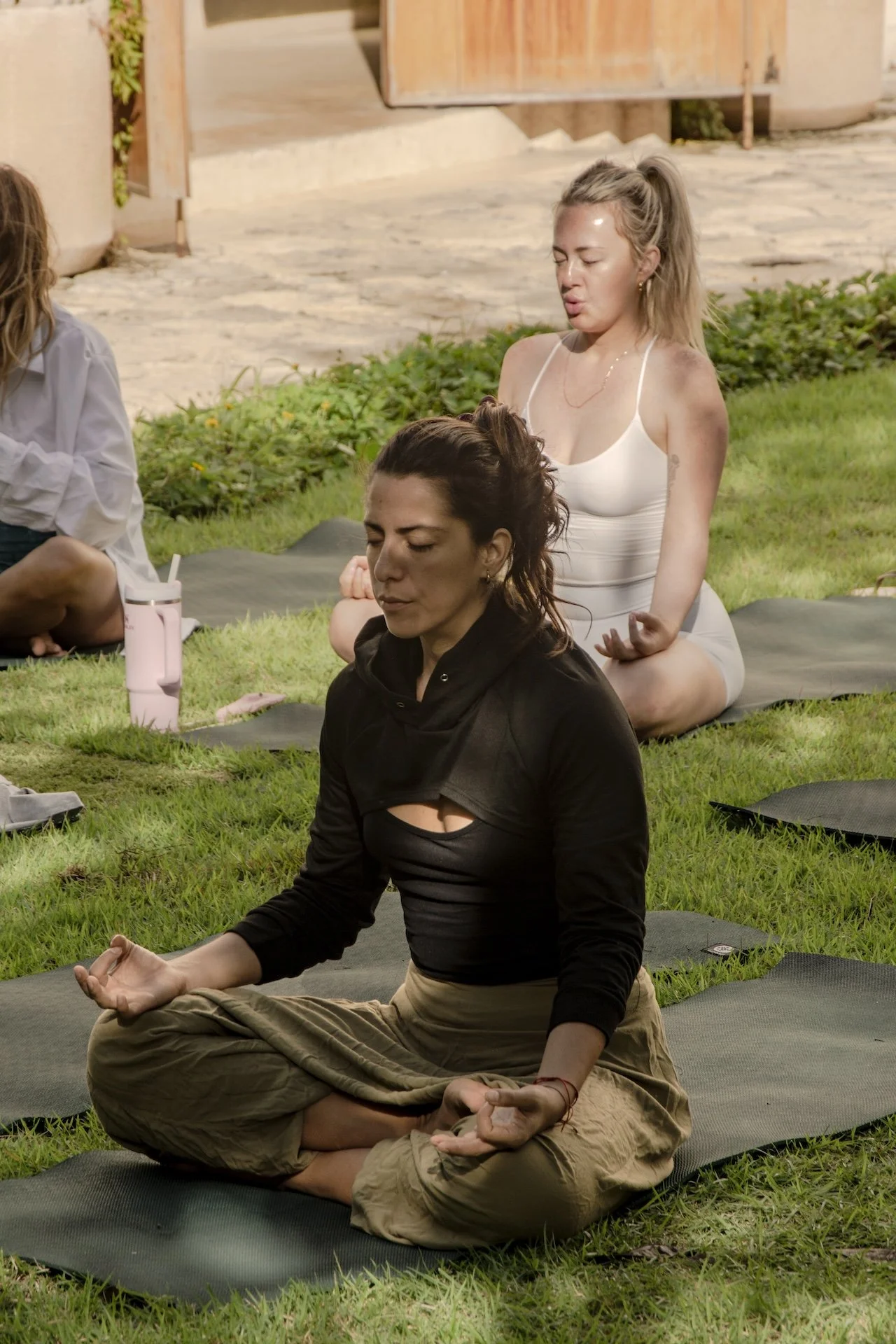
MEDITATION
You've been told to quiet your mind. We'll show you it isn't the point.
Most people try meditation once, find their thoughts won't stop, decide they're "bad at it," and give up. But a busy mind isn't failure — it's just a mind. Meditation was never about emptying your head. It's about changing your relationship to what's in it.
Your mind has a default setting: a restless churn of planning, replaying, and worrying that runs whenever it's left alone — the engine behind the 2am loops. Meditation interrupts it. You're not forcing thoughts away; you're learning to watch them come and go without being dragged along by every one. The noise quiets on its own, and the body comes down with it — the same parasympathetic settling that breath and movement create, held a little longer.
What changes is subtle but everything: a gap opens between you and your thoughts — enough to catch a feeling before it becomes a reaction, or a spiral before it pulls you under. You stop being had by every thought and start being able to choose. And that calm follows you off the cushion — into traffic, into hard conversations, into ordinary moments.
We teach it plainly, without incense or belief attached — a skill, like any other, that gets easier with practice. You'll leave with something simple you can keep doing at home, in ten quiet minutes that change the shape of the whole day.